Types Of Technology Companies
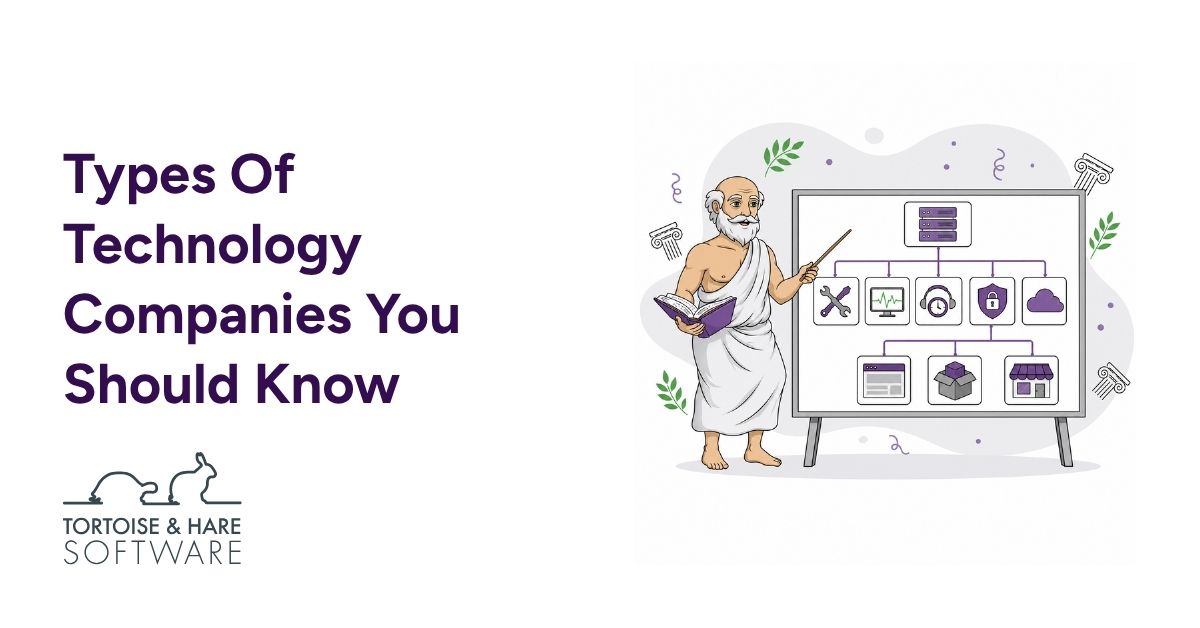
Technology companies are not all built the same way. An MSP, SaaS company, cybersecurity firm, IT consulting shop, and software development agency may all sell technical expertise, but they usually have different revenue models, buyers, sales cycles, service delivery needs, and marketing challenges.
That difference is important when you’re trying to market a technology business. A local MSP may need city focused SEO and lead generation campaigns. A SaaS company may need product content, comparison pages, and review visibility. A cybersecurity firm may need trust building content that helps buyers understand risk, compliance, and urgency. This guide breaks down the most common types of technology companies and how they differ.
Managed Service Provider (MSP)
A managed service provider is an outsourced IT partner that manages business technology on an ongoing basis. Most MSPs provide recurring services such as help desk support, endpoint management, network monitoring, backup management, cybersecurity support, Microsoft 365 administration, and strategic IT planning.
MSPs usually sell to business owners, operations leaders, finance leaders, or internal IT teams that need more support. Because the services are recurring and trust is a big part of the sale, MSP marketing usually needs to create confidence before the first sales call. Strong local SEO, service pages, case studies, reviews, and clear conversion paths can help MSPs turn search demand into qualified leads.
Break Fix IT Services Provider
A break fix IT services provider helps customers when something has already gone wrong. Instead of charging a monthly managed services fee, the provider usually bills hourly or by project. This model can work for very small businesses with limited IT needs, but it’s less predictable for both the customer and the provider.
Many break fix companies eventually try to move toward managed services because recurring revenue is easier to forecast, support, and scale. From a marketing perspective, that transition usually requires clearer positioning, stronger service packaging, and content that explains the value of proactive IT management.
Monitoring And Hourly IT Services Provider
This type of company sits between an MSP and a pure break fix provider. The provider may install remote monitoring software, alerts, and limited management tools so problems can be detected earlier, while still charging hourly or project fees for most work.
The model can be attractive for companies that want more visibility into their IT environment without committing to a full managed services agreement. It can also be a stepping stone for IT providers that are moving toward recurring managed services.
Managed Security Service Provider (MSSP)
A managed security service provider focuses on cybersecurity monitoring, threat detection, incident response, compliance support, and security operations. Some MSSPs serve as standalone cybersecurity partners, while others work alongside internal IT teams or MSPs.
MSSP buyers are often more aware of risk than general IT buyers. They may be responding to cyber insurance requirements, the NIST Cybersecurity Framework, compliance pressure, a recent breach, board concern, or customer security questionnaires. Good content for cybersecurity firms should build trust, explain risk clearly, and help buyers understand what kind of security support they actually need.
Cloud Solutions Provider (CSP)
Cloud solutions providers help companies plan, migrate, manage, and optimize cloud infrastructure. Some focus on a specific ecosystem such as Microsoft Azure, AWS cloud computing, or Google Cloud, while others provide broader cloud strategy, DevOps, security, and cost optimization services.
Cloud providers often need to explain technical work in business terms. Buyers may care less about the exact architecture and more about reliability, scalability, compliance, security, and cost control.
Software As A Service (SaaS)
A SaaS company sells software that customers access through a browser, mobile app, or connected platform, usually through a subscription. SaaS products can serve broad horizontal markets or narrow vertical niches.
SaaS marketing often depends on educating buyers before they talk to sales. Product pages, feature pages, competitor comparison pages, integration pages, content for common use cases, review strategy, and lifecycle email marketing all play a role. Unlike many service businesses, SaaS companies also need to think carefully about activation, onboarding, retention, and expansion revenue.
Independent Software Vendors (ISV)
Independent software vendors develop and sell software products that may be deployed on premise, in a private cloud, or through a hosted environment. SaaS has changed the software market dramatically, but ISVs still serve industries where customization, ownership, security, compliance, or legacy infrastructure shape buying decisions.
Many ISVs need to clarify how their products differ from SaaS alternatives. That often means explaining implementation requirements, support expectations, integration options, and long term value.
Value Added Resellers (VARs)
Value added resellers sell third party software, hardware, or platforms and add services around deployment, configuration, support, training, and ongoing maintenance. VARs are common in markets where customers need help choosing and implementing complex systems.
For marketing, VARs usually need to balance vendor messaging with their own expertise. Buyers want to know not only what product is being sold, but why that reseller is the right partner to help them implement it successfully.
Software Development Companies
Software development companies build custom applications, websites, integrations, internal tools, mobile apps, and other software systems for clients. Some are generalist development shops, while others specialize in a specific platform, framework, industry, or type of project.
Their marketing challenge is usually trust and differentiation. Buyers may not know how to compare development partners, so clear case studies, technical credibility, process explanations, and service pages tied to buyer outcomes can make the buying decision easier.
IT Services And Consulting Firms
IT services and consulting firms help businesses plan, implement, and improve technology systems. They may provide project support for cloud migrations, infrastructure upgrades, software selection, ERP implementation, compliance readiness, or digital transformation initiatives.
Unlike MSPs, many IT consulting firms do not own the entire technology environment on a recurring basis. Their marketing should make expertise, process, and business outcomes easy to understand. Case studies, industry pages, and landing pages for specific problems can help buyers see where the firm fits.
Cybersecurity Product Companies
Cybersecurity product companies sell software or platforms that help customers protect systems, data, identities, cloud environments, or applications. Examples include endpoint security, identity security, vulnerability management, security awareness training, cloud security, and compliance automation platforms.
These companies often need content that turns complex technical concepts into business risk language. Buyers may include security leaders, IT leaders, compliance teams, and executives. Strong positioning is especially important because many cybersecurity categories are crowded and difficult for buyers outside the security field to compare.
AI And Automation Companies
AI and automation companies help businesses use software, machine learning, workflows, agents, or integrations to reduce manual work and improve decisions. Some sell standalone products, while others deliver consulting, implementation, or managed automation services.
This category has grown quickly, but buyers can misunderstand it easily. Content should explain practical use cases, limits, implementation requirements, data needs, and business value without overpromising. For SEO and lead generation, practical examples usually outperform broad claims about transformation. The same shift is affecting how technology companies get found online, including the way AI search is changing MSP lead generation.
Data, Analytics, And Business Intelligence Companies
Data and analytics companies help businesses collect, clean, connect, visualize, and use data. They may build dashboards, data warehouses, reporting systems, forecasting tools, or analytics products.
Marketing for these companies should connect technical work to business decisions. Instead of only talking about data flows, models, or dashboards, strong messaging explains what leaders can do once their data becomes reliable and visible.
Wrapping Up Types Of Technology Companies
Understanding the type of technology company you are building or buying from helps clarify the business model, buyer journey, and marketing strategy. An MSP, SaaS company, cybersecurity firm, software developer, and IT consulting firm may all live under the technology umbrella, but they do not need the same website, content plan, SEO strategy, or advertising approach.
Tortoise and Hare Software helps technology companies turn that complexity into clearer positioning, stronger websites, and better lead generation systems. If your technology business needs a sharper digital marketing strategy, start by reviewing our digital marketing services or reach out for a conversation.
About The Author