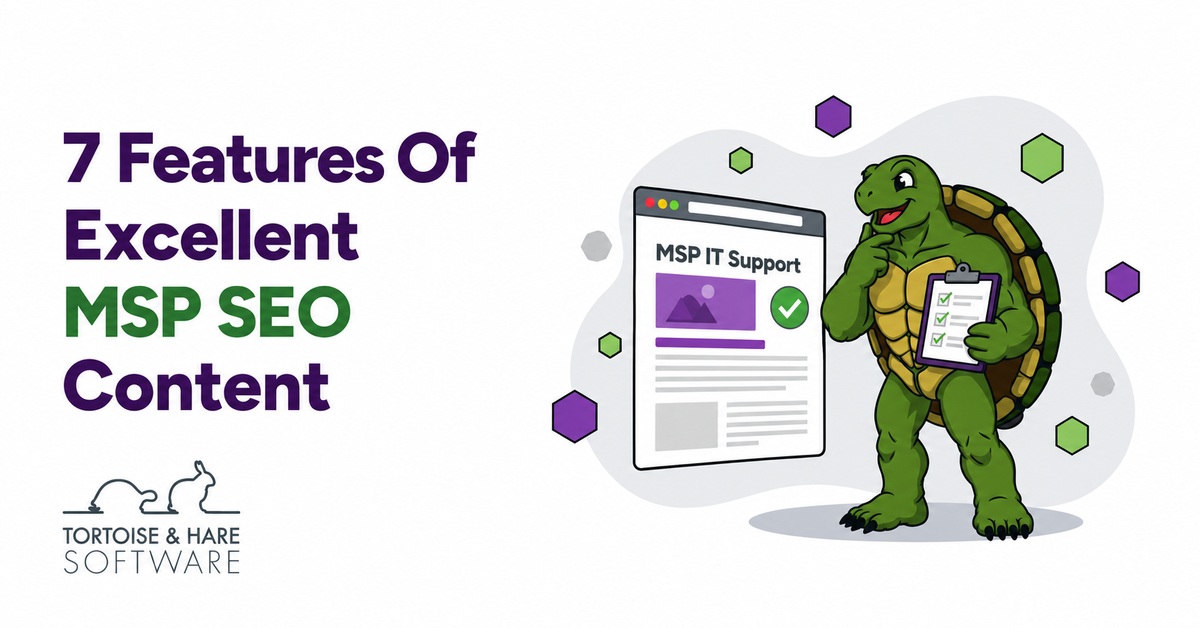
8 Top Features Of Excellent MSP SEO Content
You can publish a blog post every month and still have a website that tells buyers very little about your MSP. You’ve covered your services and included the keywords, but the copy says “proactive support,” “trusted partner,” and “complete cybersecurity,” just like the other providers in your market. Your team may deliver excellent service. The problem is that a prospect can’t see what makes it worth choosing.
I think this is where a lot of MSP content falls short. You know how much thought goes into onboarding a client, handling an urgent ticket, or helping someone plan an IT budget. Very little of that knowledge makes it onto the website. If every new page follows the same broad talking points, publishing more of them leaves you with a larger website and the same sales problem.
The top features of excellent MSP SEO content connect search demand with the information buyers need to choose a provider. That includes a researched plan, search intent, service details, customer fit, your team’s knowledge, proof, readable structure, and a nurture goal supported by a relevant call to action. Together, they give you a practical way to assess whether a page deserves a place in your marketing program.
1. It Has A Plan Behind It
Excellent MSP SEO content starts with a brief. At Tortoise and Hare Software, we create one for every piece of content we produce. Before writing, we research who we’re trying to reach, why we’re creating the page, and what the reader should understand after reading it. That gives the writer a specific business purpose to work toward.
We also vet search demand. We use keyword research and a review of the search results to check whether people are looking for the topic and whether those searches fit the customers you want to attract. A keyword with a high search volume isn’t useful if the people searching it are unlikely to need your services.
Then we review the existing site for competing content. If another page already answers the same question for the same audience, we decide whether to improve that page or give the new piece a distinct purpose. This helps avoid keyword cannibalization, where multiple pages compete for the same search intent. Before a draft starts, we should know who the page serves, what demand supports it, and where it belongs on your website.
2. It Answers The Search Intent Behind The Keywords
Search intent is what someone is trying to accomplish when they search. They might want to understand a problem, compare solutions, find a specific company, or choose a provider. The keywords give you clues, but you still need to understand the question the person expects your page to answer.
That’s especially important for a semantic search engine like Google. Semantic search uses meaning and context to connect a query with relevant content. Google’s search ranking systems include tools that interpret how words express intent and how concepts in a search relate to concepts on a page. That helps Google find relevant answers even when the wording differs from the searcher’s exact phrase.
For your MSP, the practical point is that putting a target keyword in a heading isn’t enough. Someone searching “why does our office network keep dropping” needs an explanation of possible causes and how to find the source. Someone searching “managed IT services for law firms” is exploring a service for a particular type of business. That page should explain scope, support hours, and experience with the systems those firms use. Both searches involve IT support, but they call for different answers.
We use MSP keyword research and a review of the search results to assess that intent. Are the results mostly educational articles, comparison guides, or service pages? That informs the page’s format, depth, examples, and next step. The content needs to fulfill the reason for the search. Repeating the phrase won’t compensate for answering the wrong question.
3. It Stays Narrowly Focused On Its Mission
A lot of MSP content starts with a useful question, then drifts into a sales pitch before answering it. Someone searches for why their office Wi-Fi keeps disconnecting and lands on an article that spends two sentences on possible causes before promoting managed IT services. The topic attracted the reader, but the page didn’t fulfill the intent behind the query.
I think that wastes an opportunity to earn trust. If the reader wants an explanation, give them one. Help them understand the likely causes, what to check, and when outside support makes sense. Keep the discussion focused on that question instead of working in every service your MSP offers. A relevant service recommendation becomes more useful once the reader understands how it addresses their problem.
Good SEO content is concise enough to respect the reader’s time and detailed enough to answer their questions. That doesn’t mean every article needs to be short. It means each paragraph has a job, and unrelated advice or repeated selling points don’t get in the way. Fulfill the page’s mission before asking the reader to take the next step.
When you give someone a useful answer, you give them a reason to keep exploring your site. Link to related articles that answer their next questions and internal service pages that explain relevant support options. A reader who now understands why Wi-Fi problems keep returning has a reason to explore your network support service. That creates a natural path from education to learning how your MSP can help.
4. It Reflects The Customers You Want To Serve
An MSP serving clinics has different sales conversations from one serving software firms. A practice manager may care about scheduling systems, access to patient records, and getting help while patients are waiting. An IT leader at a software firm may be looking for cloud support or a way to share security duties with an outside team. The examples you choose should reflect those differences.
We define those needs in an SEO brief before drafting. The inputs include the reader’s role, company size, industry, IT environment, pain points, and desired outcome. We also identify their buying stage. Someone exploring a problem needs a different explanation from someone comparing providers. For co-managed IT, that could mean explaining which duties you handle and which stay with the client’s IT team.
Local details should be useful too. A location page can explain onsite support and the areas your team reaches. Add local client experience where it fits. Changing a city name in otherwise identical copy doesn’t give the buyer much new information. Make it easy for prospects to recognize their business in your content. That’s how you attract inquiries that match the customers you can serve well.
5. It Shows Your Expertise Instead Of Just Claiming It
“Our team is more experienced” doesn’t give a prospect much to judge. Neither does “we go above and beyond.” Every MSP can say those things. Don’t just tell people you’re better. Show them through the quality of the help you provide. Your content gives buyers a chance to see how your team thinks before they ever speak with you.
If clients often confuse backup with disaster recovery, walk through what happens when a server fails. Explain how you decide which systems need to come back first, what a restore test reveals, and how those choices affect the time staff spend unable to work. That gives the reader a useful answer while demonstrating the judgment behind your service.
Some of the best material for this is already inside your business. Engineers hear recurring questions, account managers know where clients get confused, and salespeople hear why prospects want to leave their current provider. Bring those conversations into your content. Explain the tradeoffs your team considers and why you recommend one approach for a particular situation.
Interviews, service documentation, and customer questions give a writer the details needed to make that expertise visible. Our conversation on streamlining SEO content production explores how interviews turn business knowledge into useful content. When a buyer learns something that helps them make a better decision, they’ve experienced some of the value your team can provide.
6. It Gives Buyers Reasons To Believe Your Claims
If you say you know an industry, show what that experience involved. A relevant project gives the buyer something to assess: the customer’s situation, the decisions your team made, and the outcome. A claim about a smooth onboarding process becomes more credible when you explain how you dealt with the concerns a new client is likely to have.
Useful proof can take several forms:
- A case study that explains the customer’s problem and the changes you made.
- A client review about fast support or good communication.
- Certifications or partners that support the service on the page.
- A process example that shows how your team handles a common issue.
Keep the proof close to the claim it supports. A review about friendly staff won’t establish deep compliance expertise. A relevant project example will do more to answer that question. Google’s people-first content guidance also emphasizes original information, expert input, and trusted sources. Use those standards to judge your own pages.
7. It’s Easy To Read And Connected To Related Pages
Strong content should make a complicated subject easier to understand. Descriptive headings help readers find the answer they need. Shorter paragraphs give dense explanations room to breathe. Use bullets for service details, options, and steps. A paragraph is often better for explaining why a choice is important.
Internal links should make it easy to explore related questions and services. An article about backup planning can lead readers to your disaster recovery service and a recovery case study. Each destination adds something useful: an explanation of the service, evidence of your experience, or help with the next decision.
Our complete MSP SEO guide explains how those pages fit into the wider strategy. A disaster recovery article should explain concepts such as recovery time, recovery points, and restore testing in the context of the buyer’s decision. Including the terms is only useful if the reader learns what to do with them.
8. It Facilitates A Nurture Goal With A Relevant CTA
Every piece of content should help the buyer make a useful advance in their understanding. That’s its nurture goal. We define that goal around the reader’s current awareness stage and place in the buyer’s journey: what do they already know, what are they still trying to understand, and what would help them move forward?
For example, an office manager who knows recurring computer problems are hurting productivity may not know which support model would help. The content should explain the options and give them a relevant next step, such as a guide comparing managed IT with break-fix support. A reader who already knows your company needs different information. They may need to explore what’s included in your service, assess whether it fits their business, or resolve concerns about switching providers.
The call to action, or CTA, should continue that progression. A related article can help an early-stage reader understand a solution. A service page can help someone investigate your offer. A consultation can help a buyer who’s ready to discuss fit and next steps. The content builds the understanding. The CTA gives the buyer somewhere useful to go with it. Adding a “book a call” button to every article doesn’t replace that educational job.
Judge each piece against its intended role. Early-stage content should help readers understand the problem and explore a suitable solution. Content closer to a purchase should help them assess your offer and start a qualified sales conversation. Track those next steps alongside rankings and traffic so you can see how the content supports the buying journey.
Start With The Pages Your Buyers Rely On
Before commissioning another batch of articles, review your core service pages. Can a prospect understand what you do, who you serve, how the relationship works, and why they should believe your claims? Fix those gaps first, then build supporting articles around the questions buyers ask. Our guide to MSP white label content providers can help you assess where reusable material fits and when you need original branded content.
At Tortoise and Hare Software, we bring keyword research, a defined audience, and client knowledge into the brief before drafting. We use our PRESTO copywriting framework to connect the buyer’s concern with a useful explanation, relevant proof, and a next step. Your team’s service details and experience give that structure substance. A content process needs input from the business it’s supposed to represent.
If you’re evaluating help with your content, explore our MSP content marketing services and how they support SEO for MSPs. To discuss the gaps in your current website and where to focus next, book a free consultation.
About The Author