TNHS Helps New Jersey MSP Launch Statewide Marketing Initiative
An established MSP can mature faster than its public presence. Its team may already support complex environments, manage security and compliance, and serve businesses across a wide area. But if the message, visual identity, website, and other digital properties still reflect an earlier stage of the company, buyers get an incomplete picture.
That mismatch creates a credibility and growth problem. The MSP may have the people and delivery model to support larger organizations, while its public-facing brand still makes it look like a small local repair provider. Prospects may never understand the full service range, business value, market reach, or reasons to choose the firm.
This matters most with people who don’t already know the owners, account managers, or sales team. The website has to tell the story on its own: what the MSP does, who it helps, how it protects operations, and why that work matters to the business. Even existing customers can miss valuable services when the message is hard to find or digest.
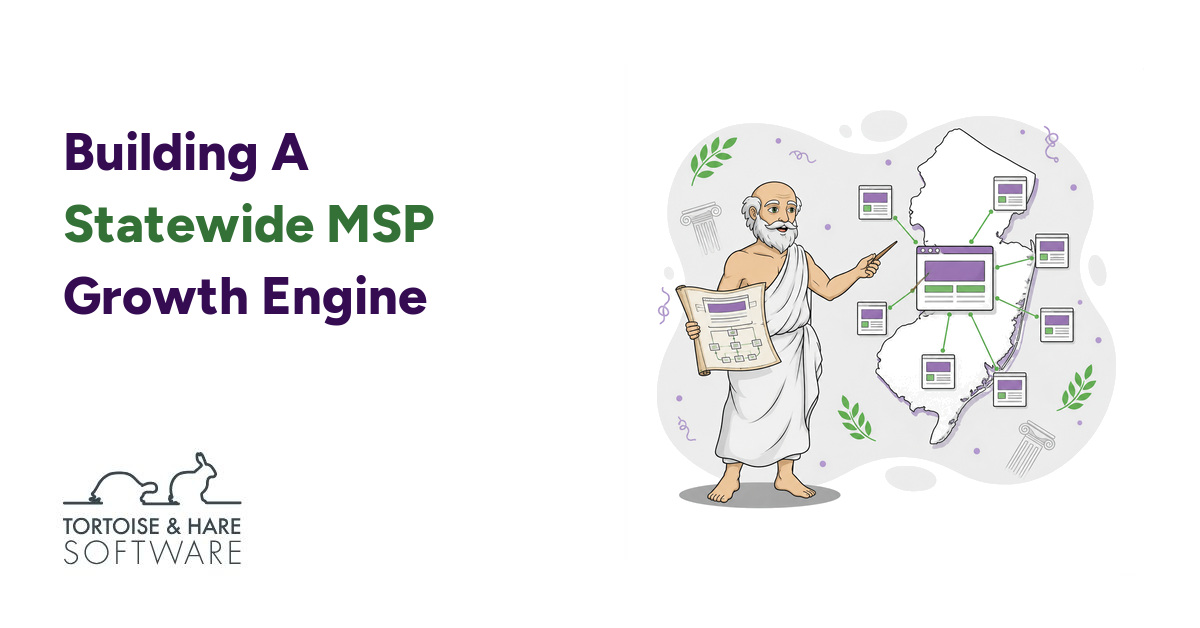
Tortoise and Hare Software recently helped a New Jersey MSP close that gap. In less than three months, we launched a completely refreshed website with more than 100 pages as part of a broader statewide marketing initiative. We also refreshed the brand, rebuilt the messaging, created a social media system, and launched Google Ads and LinkedIn Ads campaigns around the new foundation.
When The Public Brand Falls Behind The Business
Many MSP websites were built for the company that existed years ago. A few broad service pages, strong reviews, and promises to answer the phone may have been enough when most new clients came from referrals. Those elements still matter, but they don’t give a mature MSP a defensible position. Almost any provider can make the same claims.
The old Monmouth Cyber site had another problem: it was a legacy Beaver Builder installation on the verge of failing under recurring hosting and out-of-memory errors. We implemented Redis caching and added memory as a stopgap just to keep the site functioning while the replacement was being built.
The lead numbers looked healthier than the business results. The site was generating roughly 10 to 15 inquiries per month, but almost all of them were consumers. Only about three became customers over the course of the year. The old message created urgency and displayed plenty of social proof, yet it didn’t build a business case for the larger organizations the MSP wanted to serve.
A statewide growth plan has to answer more substantial questions. Can the provider support a company with several offices? Does it understand the buyer’s industry? How will its managed IT, cybersecurity, cloud, compliance, and consulting work reduce risk or improve operations? What will the relationship look like after the sale?
A new homepage and color palette can’t answer all of that. In my opinion, a redesign earns its value when the brand, message, website, search presence, social media, and paid campaigns all help buyers understand the same value proposition. The site also needs the technical structure and landing pages to support each audience without sending everyone to one generic page.
A Website Built Around The MSP Buying Process
The new site follows the way business leaders compare an IT and cybersecurity provider. One page doesn’t have to explain everything. Each major buyer question has a logical home.
Brand And Messaging That Match A Mature MSP
We refreshed the brand from the message through the visuals so the public experience better matched the maturity of the company behind it. The new copy explains the firm’s value in plain language, presents its services more consistently, and removes awkward or inconsistent writing that had accumulated across the old site.
The landing pages now tell business-case-driven stories for established and mid-market organizations. Instead of relying mainly on urgency, responsiveness, or review volume, they connect the service to outcomes a rational business buyer can evaluate: continuity, risk reduction, productivity, compliance, and better technology decisions.
We kept the strongest social proof, but gave it a better job. Reviews and case studies support the value proposition rather than standing in for one. That helps a buyer understand both why the firm is different and why its claims are credible.
A Statewide Local Landing Page Architecture
The local SEO plan starts with a statewide New Jersey hub. From there, the site reaches every county in the state and a network of more than 40 city pages. That gives the MSP a page structure built for broad statewide reach and more focused local searches.
The county landing page network covers:
- Atlantic
- Bergen
- Burlington
- Camden
- Cape May
- Cumberland
- Essex
- Gloucester
- Hudson
- Hunterdon
- Mercer
- Middlesex
- Monmouth
- Morris
- Ocean
- Passaic
- Salem
- Somerset
- Sussex
- Union
- Warren
More than 40 city pages extend that coverage into the local markets where buyers search. Priority cities include:
- Cherry Hill
- Edison
- Hackensack
- Hoboken
- Jersey City
- Middletown
- New Brunswick
- Newark
- Parsippany
- Princeton
- Red Bank
- Shrewsbury
- Toms River
- Westfield
The larger network gives the provider room to speak to local buyers without forcing the homepage to target every place at once.
Services And Industry Knowledge
Dedicated service pages explain the firm’s managed IT services, IT support, cybersecurity, cloud, compliance, communications, and consulting offers. Industry pages connect those services to the needs of the businesses the MSP serves.
The key industry pages target:
- Accounting
- Architecture
- Construction
- Engineering
- Finance
- Healthcare
- Insurance
- Legal
- Manufacturing
- Property management
- Real estate
Positioning For Larger Businesses
Page volume wasn’t the only change. The previous message brought in too many consumer inquiries and very small businesses looking for urgent IT help. That didn’t fit the provider’s statewide growth plan or its goal of serving larger customers.
The new positioning moves away from emergency cleanup language. It presents the MSP as a strategic IT and cybersecurity partner for established and mid-market businesses. That shift helps the right prospects recognize the fit before they reach sales.
This setup works for buyers at different stages. One person may be researching a security problem. Another may be comparing managed service providers. A third may need an IT partner that knows a regulated industry. They shouldn’t all be sent to the same broad page.
Proof And Buyer Resources
Case studies, reviews, pricing information, and buyer resources answer later-stage questions. Sales teams can also share these pages after a call. The site becomes more than a source of visits. It helps the company explain its value and earn trust.
Conversion Paths For Different Levels Of Intent
The conversion rate optimization plan gives visitors more than one way to respond. Above-the-fold forms let high-intent buyers request a consultation without searching for the next step. They can act as soon as they reach a key page.
A chatbot gives people a fast way to ask a question when they aren’t ready to complete a form. An exit-intent lead magnet offers a useful buyer guide before a visitor leaves. That creates a softer conversion path for people who are still doing research and gives the MSP a chance to continue the conversation.
These conversion paths support different stages of the buying process. A ready buyer can book a call. A visitor with a quick question can start a chat. A person who needs more time can download a resource. The site doesn’t depend on one button or one form to create leads.
Performance And Technical Health
A large marketing site can’t create much value if it loads slowly or becomes hard to maintain. The old Beaver Builder installation was producing hosting and out-of-memory errors, which forced us to add memory and a Redis cache as a temporary stabilization measure. For the rebuild, we moved the site to a more modern, SEO-friendly page builder and reduced the database footprint by more than 90%. Google’s Core Web Vitals offer a useful way to evaluate the loading performance, responsiveness, and visual stability we were working to improve.
After launch, the site reached a 96% health score in SEO audit tools. TNHS also monitored redirects after the website migration, hosting analytics, error reports, visitor recordings, and spam controls so technical issues wouldn’t interrupt prospects or search engine crawlers. Performance wasn’t treated as a launch-day detail. It was part of protecting visibility and lead generation.
Immediate SEO Impacts
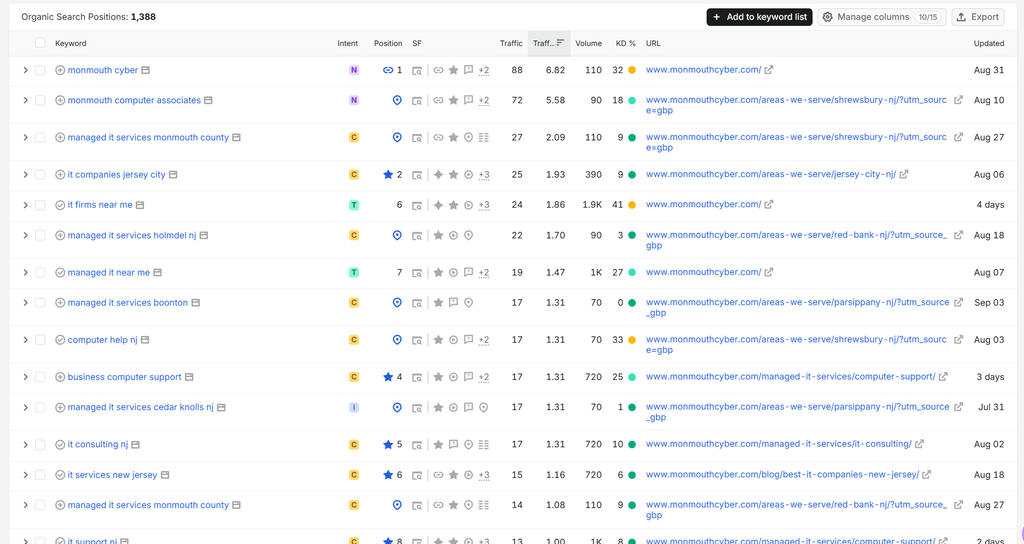
All that is well and good, but it still has to make an impact right? After launching the new website in late June the keyword growth started to increase. Consumer lead volume all but disappeared and qualified businesses began reaching out. A summer blitz helped prepare the client for the fall buying season.
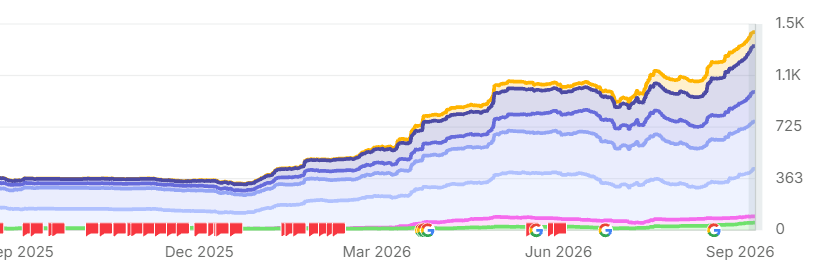
There are lots of SEO companies that can make these graphs go up, often by publishing low intent informational blogs that are never going to move the needle but make look traffic numbers look good and make for good case studies like “increased X number of high ranking keywords.”
Not all all SEO companies can help a company reach top 5 keyword rankings for high intent highly competitive commercial keywords in a market like New Jersey, especially in a short time frame. These type of results come with more than 7 years serving the MSP market, working with WordPress sites, and learning lessons from dozens of experiments across a range of client sites and circumstances.
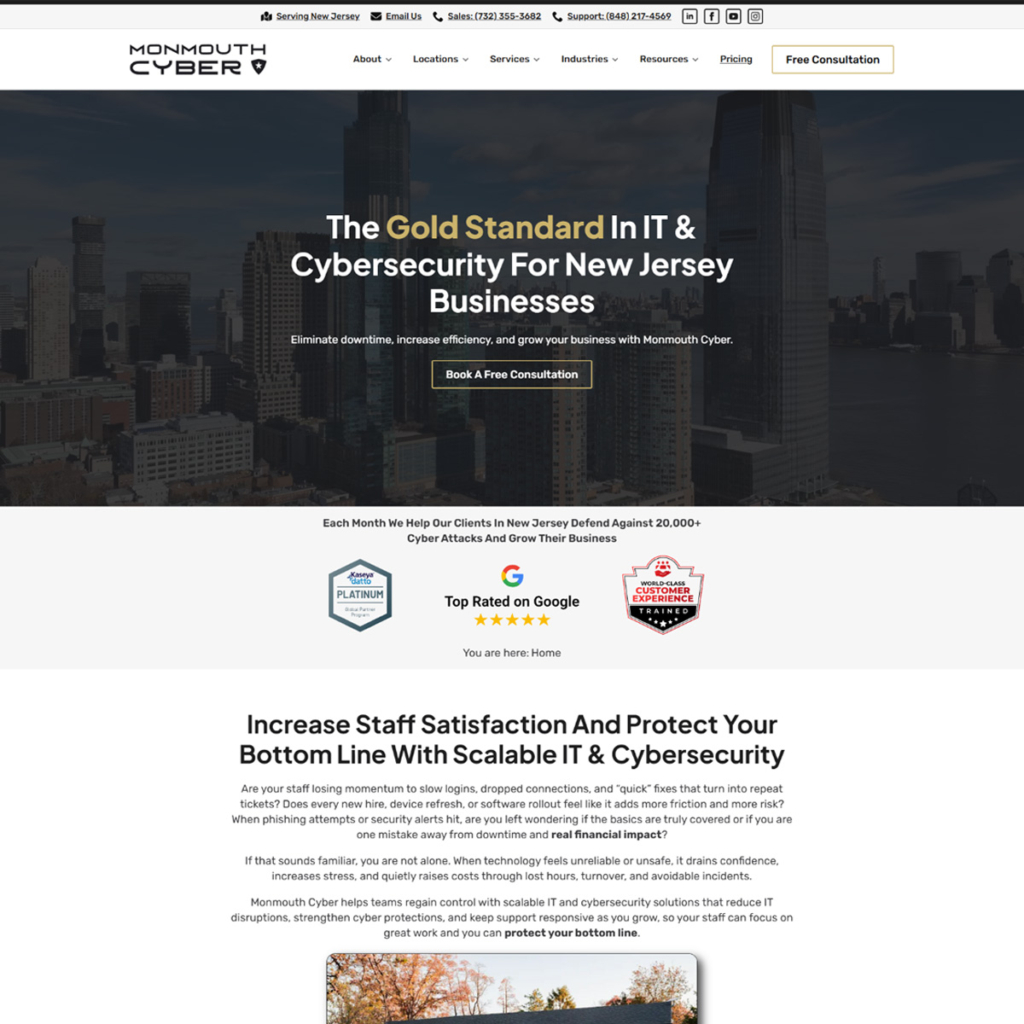
Website Showcase: Monmouth Cyber
Monmouth Cyber is an established New Jersey managed service provider. It helps businesses with managed IT, cybersecurity, cloud, compliance, and related technology services.
The Monmouth Cyber website launched on June 6 after a build of less than three months. The 100-plus-page site brings its statewide service area, coverage for every New Jersey county and 44 cities, service pages, industry pages, buyer resources, case studies, pricing information, office presence, and contact paths into one experience. Visit the client website to explore the finished project.
Extending The Brand Across LinkedIn And Local Search
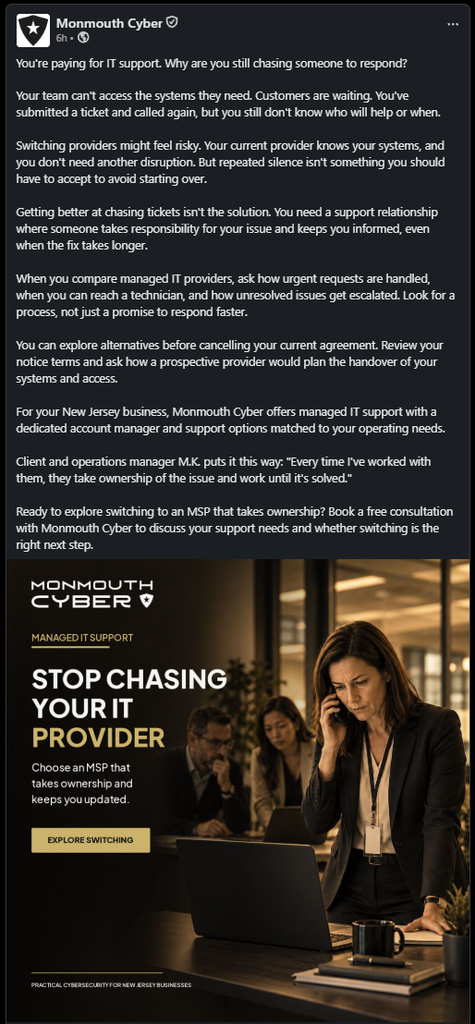
The website was only one public touchpoint. We created reusable social media templates, updated the company’s LinkedIn graphics and messaging, prepared coordinated LinkedIn header graphics for employees, and cleaned up key Google Business Profile information. The result was a more consistent brand wherever a prospect chose to investigate the firm.
The organic social content uses the same business-centered approach as the new landing pages. Instead of posting generic technology reminders, it connects technical services to operational concerns such as workforce productivity, business continuity, security risk, compliance, and industry workflows. Branded graphics give those ideas a recognizable visual presence in the feed.
After the organic program launched, the company saw a rapid increase in followers and post engagement. That early response suggested there was room to build a qualified audience around the new positioning, so we used a smaller portion of the paid-media budget to reinforce that progress on LinkedIn Ads.
How The Landing Page Network Works As One Unit
Publishing dozens of local pages isn’t enough. The pages need a shared structure that helps buyers and search engines understand how they relate. Otherwise, a large page set can become a group of isolated URLs that compete for attention without building much authority together.
TNHS set up a hub-and-spoke internal linking structure. The statewide page acts as the main local hub. County pages support the next level of detail, while more than 40 city pages cover focused markets. Service and industry pages connect the location network to what the MSP does and who it serves.
Contextual links guide visitors between useful pages. A buyer on a city page can move to the right service, industry, case study, or consultation path. A visitor on a service page can see the local markets where that service is available. These links also help search engines crawl the full network and understand the relationship between New Jersey, the provider’s services, its target industries, and each local market.
The header and footer make the structure visible across the site. The header surfaces the statewide hub, all 21 county paths, and priority city pages. The footer reinforces county, city, industry, resource, and service links on every page. That reduces the risk of orphaned landing pages and keeps important parts of the site within easy reach.
Well-planned internal links also pass authority through the page network. Instead of asking each local landing page to rank on its own, the pages support one another as part of a New Jersey topic cluster. This gives the site a stronger base for topical authority and a broad set of service, industry, county, and city keyword themes.
The Integrated Marketing System Behind The Launch
The website launch was the most visible milestone, but the broader value came from launching the brand, content, search, social, and paid media as one system. Each channel had a clear role, and the new landing-page network gave campaigns a relevant place to send each audience.
- Website development and conversion strategy: Above-the-fold forms, a chatbot, service details, case studies, reviews, and buyer guides give visitors several ways to learn, compare, and contact the provider.
- Brand and messaging: The refreshed visual identity and business-case-driven copy better communicate the MSP’s maturity, capabilities, and value to established organizations.
- Local and regional SEO: A New Jersey hub, 21 county pages, and more than 40 city pages create a statewide search footprint connected through the site’s navigation and internal links.
- Content and organic social: Service pages, industry pages, case studies, buyer resources, LinkedIn posts, and branded graphics carry the same positioning across the buying journey.
- Google Ads: We launched 314 ad groups across state, county, city, service, industry, lead-magnet, download, and “near me” themes. The expanded landing-page network let us align more ads with a specific search intent instead of routing the whole campaign to the homepage.
- LinkedIn Ads: A smaller share of the media budget targeted operations professionals across New Jersey. The goal was to amplify the organic posting program, reach additional qualified buyers, and keep the brand visible through a longer B2B sales cycle.
- Performance and technical health: A database reduction of more than 90% removed recurring slowdowns, while a 96% post-launch site health score gave the marketing programs a more dependable base.
The interaction between Google and LinkedIn was especially useful. We could see visitors arrive through Google Ads, review the website, and then continue to the company’s LinkedIn page and follow them there rather than convert immediately. LinkedIn data showed that the resulting audience included people in qualified business roles who chose to follow the company and keep up with its content.
That’s an important path for an MSP with a considered sales cycle. A prospect may not be ready to replace an IT provider on the day of the first search, but a relevant landing page can earn the next step. LinkedIn then gives the firm a way to remain familiar while that buyer keeps researching and waits for the right timing.
None of these parts is unusual on its own. The value comes from making the website, search presence, Google Ads, LinkedIn Ads, organic content, and public profiles speak with one message. That turns the site into a working base for statewide demand generation instead of a brochure that starts aging on launch day.
Why A Marketing Foundation Beats A Standalone Redesign
MSPs often treat a website project as a visual update. Search, content, paid ads, and contact paths come later. That order can create costly rework. New pages must be added. Menus change again. The team may learn that the site wasn’t built for the markets it wants to enter.
Established firms should stop treating the website, search engine optimization, content marketing, social media, and paid campaigns as separate purchases. Start with the growth plan. Define the target market, offers, industries, buyer questions, proof, and conversion strategy. Then build the site and channel plan around those choices so every public touchpoint tells the same story.
Every page and campaign doesn’t have to launch at once. The foundation simply needs to make the next phase easier. A sound site structure lets the MSP add location pages, improve service pages, publish new guides, test paid traffic, and refine offers without starting over.
What This Launch Shows Established MSPs
This project shows what can happen when website development supports the growth plan from day one. The site explains statewide reach, sorts a large service set, gives buyers several forms of proof, and creates useful pages for ongoing marketing.
It also shows why MSP marketing needs industry context. A managed service provider isn’t selling one simple product. Buyers may compare support plans, security skills, compliance knowledge, local access, industry fit, response times, and price before they book a call. The site must aid that review without becoming hard to use.
For MSP leaders planning a similar move, Tortoise and Hare Software offers marketing services for technology companies in New Jersey and focused marketing support for managed service providers. One plan can connect website development, content, regional reach, paid campaigns, and conversion planning.
Build The Foundation For Your Next Market
A statewide growth plan needs more than a longer list of cities in the footer. It needs a message that fits the market. It needs pages that match the way buyers search and compare firms. It also needs proof and contact paths that support sales.
Ready to build a scalable marketing foundation for your MSP’s next stage of growth? Book a free consultation with TNHS.
About The Author