Demand Capture vs Demand Generation for MSPs
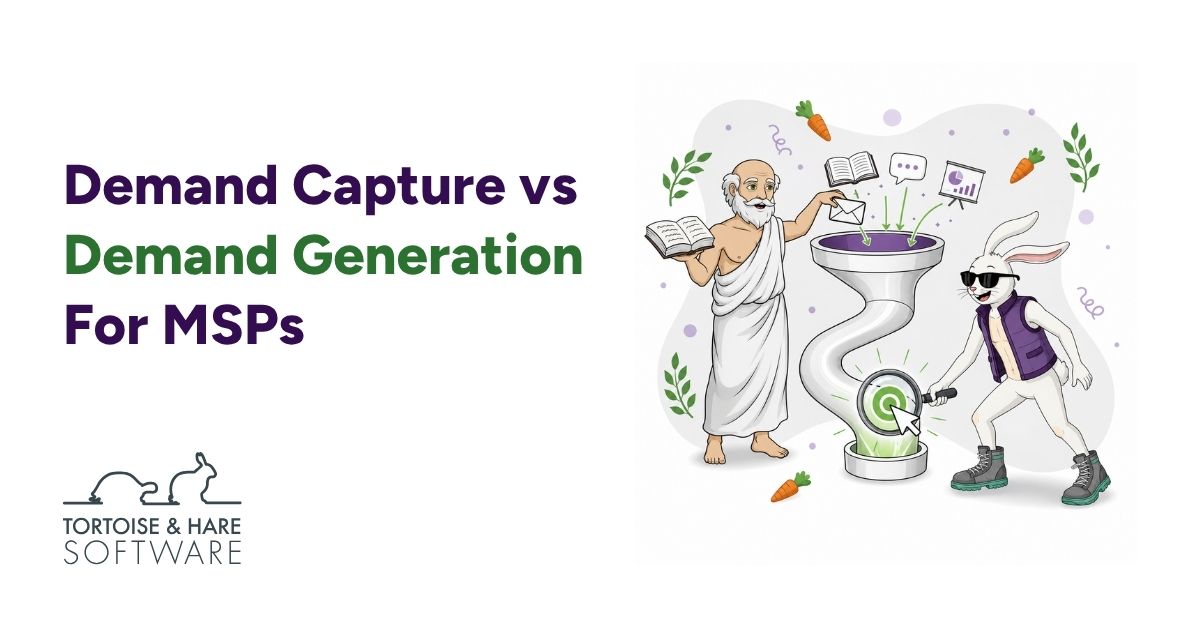
Most MSP marketing is built for the moment after a buyer has already decided to shop. Service pages. Local SEO. Google Ads. Pricing content. Review signals. A clear way for someone to book a call.
That’s demand capture. And it works. If a business owner is searching for managed IT services, cybersecurity support, or an MSP near them, you want to show up. No argument there.
Demand capture only responds to buying moments. It doesn’t create them. If your entire growth strategy depends on catching buyers at the end of their journey, every sales conversation starts cold. You’re competing against three other MSPs that sound the same. Your website then has only a few seconds to earn trust that should have been built over months.
That’s where demand generation changes things.
What demand generation does for MSPs
Demand generation creates familiarity, trust, and preference before the buyer is actively shopping.
That matters because most potential B2B buyers are not shopping at any given moment. LinkedIn’s research describes this as the 95-5 rule. Roughly 95% of the category is out of market today. Only about 5% is ready to buy.
For MSPs, this can include educational blog content, founder-led LinkedIn posts, newsletters, and webinars. It can also include long-tail problem-based articles, opinionated thought leadership, and content that teaches buyers what to consider before they ask for a proposal.
The job is different from demand capture. Demand capture answers the buyer who says, “I need an MSP. Who should I call?” Demand generation reaches the buyer earlier, when they’re thinking things like:
- Why does IT always become a bottleneck when we hire?
- Are our cybersecurity basics good enough for insurance?
- What should a leadership team expect from a proactive MSP?
- How do we know if our current provider is actually doing a good job?
Those questions won’t turn into a sales call today. But they shape how the buyer thinks. They shape what the buyer values. They shape which companies feel helpful, credible, and worth remembering when the problem becomes urgent enough to act on.
The sales conversation changes when buyers already know you
When demand generation is working, prospects don’t hear about you for the first time on the day they start comparing providers.
They’ve already seen how you think. They may understand some of the tradeoffs. They recognize your name. They’re less likely to view every MSP as interchangeable.
That means the sales conversation starts from a different place. Instead of proving credibility from scratch while three other companies do the same, you’re building on familiarity that already exists. Prospects come in with better questions. They ask about risk, response models, onboarding, business continuity, or how you help leadership make better IT decisions. Not just “how much does IT support cost?”
That is a better conversation. Not always easier. Better.
Showing expertise instead of claiming it
Walter Payton said:
“When you’re good at something, you’ll tell everyone. When you’re great at something, they’ll tell you.”
Every MSP can say it’s proactive, responsive, strategic, secure, and easy to work with. The buyer has heard all of it before. A weak MSP and a strong MSP can both write “proactive IT support” on a website.
Demand generation gives the stronger MSP a way to show the difference. You can explain a cybersecurity risk in plain language. You can teach prospects what questions to ask a provider. You can walk through the tradeoffs between cheap IT support and accountable IT leadership. You can publish founder-led thinking that makes the company sound like people with judgment, not just another provider with a services list. The 2025 Edelman-LinkedIn B2B Thought Leadership Impact Report reinforces this point. Strong thought leadership can influence visible decision-makers. It can also influence the less-visible people shaping a buying decision internally.
This is where a lot of MSP content falls apart. It describes what the company sells, but it doesn’t reveal how the company thinks. Demand generation closes that gap. It gives prospects a way to experience your judgment before they ever book a call.
Content marketing is the engine behind demand generation
Demand generation runs on content. But the content that builds trust and familiarity with buyers doesn’t always need to rank on Google. That’s an important distinction most MSPs miss.
Don’t let your MSP marketing agency treat every piece of content as an SEO play. If it won’t rank, it doesn’t get made. That thinking leaves huge gaps in the funnel. Some of your most valuable content won’t target a high-volume keyword. Examples include opinionated takes on vendor selection, founder perspectives on IT leadership, and honest assessments of common mistakes. It might not rank at all. And that’s fine.
The goal of demand generation content is to shape how prospects think before they’re shopping. That content gets distributed through email newsletters, LinkedIn posts, and social media. It gets repurposed into shorter clips, quotes, and conversation starters. Search is one distribution channel, not the only one. A full funnel content strategy creates material for every stage: awareness, consideration, and conversion. It also distributes that material where your audience spends time.
The practical shift
MSPs still need demand capture. Strong service pages, local SEO, paid search, conversion assets, and clear next steps for active buyers. That foundation stays.
But if you want to be known before buyers start comparing providers, you need to layer in demand generation. The practical shift is to stop asking one type of marketing to do both jobs. A clear MSP marketing strategy defines how those jobs work together.
Use service pages, local SEO, and Google Ads to meet active demand. Then build content that helps prospects understand problems earlier, even when that content won’t rank for a competitive keyword. Distribute ideas through email and social media consistently. Create thought leadership that shows prospects how an expert thinks about their problems and the solutions available to them. Where paid media fits, use a full-funnel advertising strategy that builds awareness, nurtures interest, and captures leads. Watch the longer-term signals: branded search, direct traffic, email engagement, better sales conversations, and the quality of inbound leads.
At Tortoise and Hare Software, we help MSPs and B2B technology companies build this kind of system. We build full funnel content strategies that capture existing demand through search. We also create familiarity through content marketing, email, and social before buyers start shopping.
That’s a very different system from publishing service pages and hoping active buyers pick you at the end.
Ready to build a marketing system that does both? Book A Free Consultation.
About The Author