How AI Search Is Changing MSP Lead Generation: What CEOs Need to Know
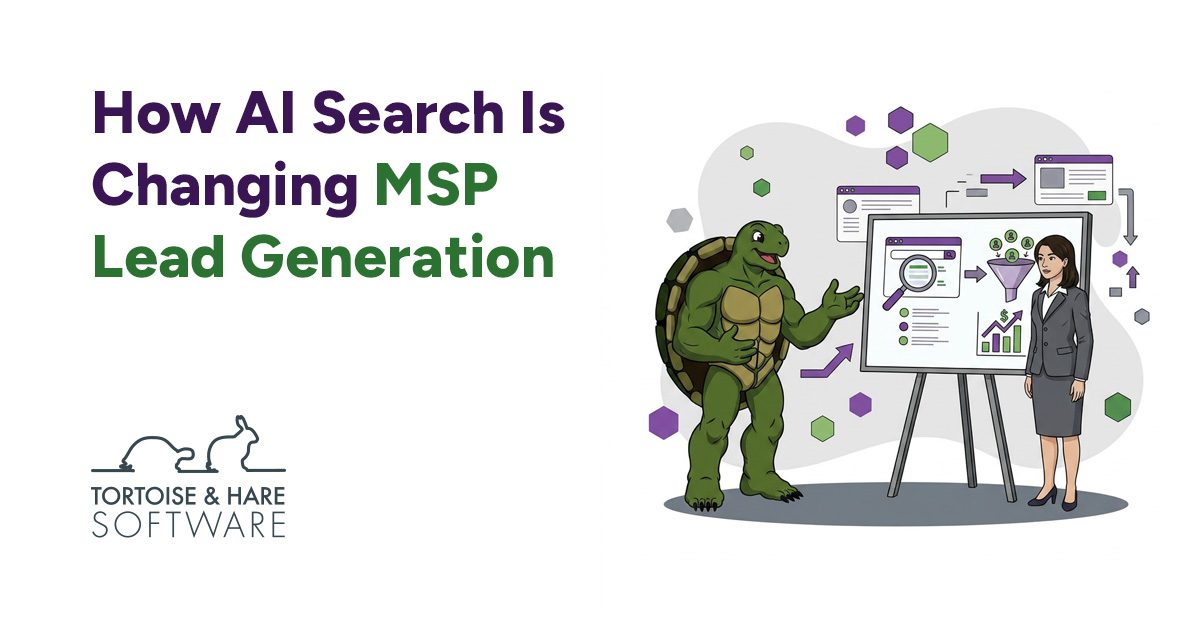
AI search is changing MSP lead generation, but not in the simple way many headlines suggest.
It doesn’t mean SEO is dead. It doesn’t mean your website no longer matters. It doesn’t mean MSP owners need to become search experts.
But it does mean the way prospects discover, evaluate, and shortlist managed IT providers is changing.
For years, many MSPs thought about search in a fairly linear way: rank on Google, earn the click, bring the visitor to the website, convert that visitor into a lead, and pass the lead to sales.
That model still matters. But it’s no longer the whole picture.
Google is increasingly answering questions directly in search results. AI search tools can summarize IT problems, explain managed services, compare support models, and help buyers evaluate providers before they visit an MSP’s website.
For MSP CEOs, the issue isn’t whether you should become an SEO tactician. The issue is whether your company is still discoverable, credible, and easy to evaluate in a search environment where prospects may learn a lot before they ever click.
What’s Actually Changing in Search?
The biggest change is that search is becoming more answer-oriented.
In the past, a prospect might search a question, scan a list of links, click a few websites, and piece together an answer. Today, Google and AI search tools can often summarize the answer directly.
That creates more zero-click searches.
A zero-click search happens when someone gets enough information from the search results page that they don’t click through to a website. They may still learn something. They may still notice a brand. They may still shape their opinion. But they don’t necessarily visit a site right away.
For MSPs, this matters because many buying journeys begin with questions, not provider names.
A prospect may search:
- “How do we know if we need managed IT services?”
- “When should a company switch IT providers?”
- “What should be included in managed IT support?”
- “How do we compare MSPs?”
- “What cybersecurity questions should business leaders ask?”
If Google or an AI search tool gives a useful summary, the buyer may not click immediately. But that doesn’t mean the search had no value. It may still shape what the buyer believes, which MSPs they recognize, and what criteria they use later.
Why This Makes Website Traffic Harder to Interpret
Most MSP CEOs are used to seeing search performance summarized through familiar metrics: rankings, traffic, impressions, clicks, leads, and conversions.
Those numbers still matter. But they can be misleading when viewed alone.
If organic traffic goes down, it may mean rankings have dropped, content is outdated, competitors are winning, or technical SEO issues are limiting visibility. But it could also mean some early-stage informational searches are being answered directly in search results.
That’s why traffic changes need diagnosis, not panic.
A marketing team should be able to explain:
- Which MSP service pages gained or lost traffic
- Whether high-intent pages are still producing qualified leads
- Whether branded search is increasing or decreasing
- Whether leads are becoming better or worse
- Whether prospects mention specific content during sales conversations
A drop in broad blog traffic may not be as serious as a drop in visits to your managed IT services page. A lower-traffic page may be more valuable than a high-traffic article if it attracts prospects who are close to choosing a provider.
The better question isn’t simply, “Are more people visiting the website?”
The better question is, “Are the right-fit prospects finding us, trusting us, and moving closer to a sales conversation?”
Why Generic MSP SEO Content Is Becoming Less Useful
AI search raises the bar for content quality.
For a long time, many companies treated SEO content as a volume game. Pick keywords. Publish articles. Add internal links. Wait for traffic.
That approach was already weakening before AI search became a mainstream concern. Now it’s even less reliable.
Generic MSP content has several problems. It doesn’t say anything competitors aren’t already saying. It attracts broad traffic that may not match your ideal customer. It fails to demonstrate real expertise. It doesn’t help prospects make a decision.
B2B buyers don’t need another surface-level article that defines managed IT services.
They need content that helps them think through a business decision.
For example, a stronger MSP article might explain when a business has outgrown break/fix IT support, how to compare managed IT providers, what cybersecurity questions leadership should be asking, or why recurring IT issues often point to a larger operational risk.
That type of content is more likely to attract qualified buyers because it helps prospects understand their own problem before they’re ready to book a sales call.
The question isn’t “Are we publishing content?”
The question is “Are we publishing content that proves we understand our buyers’ IT problems better than competing MSPs do?”
How Your MSP Website’s Job Is Changing
AI search doesn’t make your website irrelevant.
It makes your website’s role more important at the moment of evaluation.
If a buyer reaches your site after doing research through Google, AI tools, review sites, LinkedIn, referrals, or competitor comparisons, they may arrive with stronger opinions and sharper questions.
They’re not just asking, “What do you do?”
They’re asking:
- Do you understand our business and IT risks?
- Have you solved problems like ours before?
- Is your approach clear?
- Do you seem credible?
- Are you different from the other MSPs we found?
- Is this worth a conversation?
Your website has to support that evaluation.
That means service pages should be specific. Blog content should be useful. Case studies or examples should be credible. Calls to action should match the buyer’s stage of readiness. Navigation should make it easy for a serious prospect to find what they need.
A website that only lists services and uses vague claims like “proactive support,” “custom solutions,” or “peace of mind” will struggle to build trust if every competing MSP says the same thing.
Your MSP website is no longer just a place to capture traffic. It’s where buyers confirm whether your company deserves to be on the shortlist.
What MSP CEOs Should Ask Their Marketing Team Now
MSP CEOs don’t need to manage SEO execution. But they should be able to test whether the strategy is adapting.
Here are the questions worth asking:
- Which buyer questions are we trying to own?
- Are we targeting keywords because they have volume, or because they connect to real buying intent?
- How are we adapting our content for AI-influenced search behavior?
- Which service pages are gaining or losing organic traffic?
- Are traffic changes affecting high-intent pages or mostly informational content?
- Are qualified leads increasing, decreasing, or staying flat?
- Do we know which content influences sales conversations?
- Can a serious buyer understand who we help and why we’re credible within a few minutes?
- Do our managed IT, cybersecurity, co-managed IT, and industry pages answer the questions prospects ask before booking a call?
- Are we publishing anything that another MSP could easily say?
- Does our content reflect real expertise?
- Are we reporting on pipeline influence, or only on traffic and rankings?
These questions shift the conversation from “How much traffic did we get?” to “Are we becoming easier for the right prospects to find, trust, and contact?”
The Path Forward Is Better MSP Search Alignment
AI search isn’t a reason to abandon SEO. It’s a reason to do SEO with more discipline.
The MSPs that benefit from search in the next phase of lead generation won’t be the ones publishing the most generic content. They’ll be the ones that understand their buyers, answer important IT and cybersecurity questions clearly, demonstrate credibility, and connect search visibility to qualified pipeline.
That requires alignment across strategy, content, website messaging, analytics, and sales feedback.
Your marketing team should know which buyer questions matter. Your content should support real decisions. Your website should make your MSP easier to evaluate. Your reporting should connect search activity to qualified opportunities.
The practical reality is simple: your buyers are still searching. They’re still comparing MSPs. They still need trustworthy information. They still visit websites before making decisions.
What’s changed is how much of that evaluation may happen before the click, before the form fill, and before the sales call.
AI search doesn’t eliminate the need for MSP SEO.
It makes strategic, buyer-focused SEO more important.
If your current strategy is built around generic content, surface-level reporting, and traffic volume alone, it’s time to revisit the foundation.
Book a free consultation to review whether your website and search strategy are built for how B2B buyers discover, evaluate, and choose MSPs today.
About The Author