Case Study: TNHS Helps Advertiser Triple Landing Page Conversion Rates
A landing page can be generating leads and still be underperforming.
That was the situation with this client’s managed IT support landing page. The page was already being used for Google Ads and it was producing leads, which meant the campaign was doing something right. But lead volume alone was not the full story. The conversion rate was lower than it should have been, which meant the client was likely paying more per lead than necessary.
That distinction matters. In paid media, generating leads is not always enough on its own. What those leads cost has to make sense. One of the main purposes of conversion rate optimization is to improve the efficiency of a campaign so cost per lead comes down and profitable growth becomes easier to sustain.
That was the real opportunity here. The client had consistent lead flow, but there was a strong case for improving the landing page so the campaign could produce those leads more efficiently. That kind of issue often goes unnoticed at first. When a business is happy to see steady volume coming in, it is easy to postpone questions about CPL until months later. But by that point, inefficient performance may already be shaping the account in the wrong direction.
Rather than waiting for that to become a larger problem, we recommended testing an improved version of the page. We created a duplicate landing page, reworked the copy and structure using our in-house PRESTO framework, corrected a range of technical and implementation issues, and ran a split test against the original.
Over an 85-day test period, the updated page generated 18 leads. The original page generated 6.
That result matters because it shows what landing page conversion rate optimization can do when it is approached systematically. This was not about chasing a quick win or making cosmetic edits for the sake of change. It was about improving a page that was functional, but not efficient enough, and giving the campaign a better foundation for long-term growth.
This case study walks through the original problem, the changes we made, how the split test was structured, and why the updated page produced a 3x improvement in lead volume.
The Original Page Was Generating Leads, but Not Efficiently Enough
One of the most common mistakes businesses make with landing pages is assuming that a page is fine because it is already converting.
That assumption can be expensive.
A page that produces some leads may still be underperforming badly relative to the amount of traffic and budget behind it. In this case, the client was spending more than $5,000 per month on Google Ads and sending that traffic to a managed IT support landing page. The page was producing results, but not at a level that made the economics as strong as they could have been.
The issue was not that the campaign lacked demand or that the traffic strategy was fundamentally broken. In fact, the fact that the page was generating leads told us there was real commercial intent in the traffic. The bigger problem was that the landing page itself was not doing enough to support conversion, which likely pushed cost per lead higher than it needed to be.
The headline was weak. The above-the-fold experience did not communicate enough value quickly enough. The structure of the page did not guide users through the decision process as clearly as it should have. And there were technical and implementation issues behind the scenes that suggested the page had not been built with landing page performance or landing page experience in mind.
None of those issues on their own necessarily prevent leads from coming in. But when several small weaknesses stack together, the result is often a page that converts less efficiently than it should. That is exactly the kind of situation where conversion rate optimization can make a meaningful difference.
Why Landing Page Conversion Rate Optimization Matters
When companies think about improving lead generation, they often focus first on traffic.
In the early stages, that usually makes sense. If a business does not have enough traffic or enough ad spend behind a landing page, it is difficult to run useful split tests or make confident optimization decisions. With low traffic, the data comes in slowly and the results are often too noisy to support clear conclusions. At that stage, the more immediate challenge is usually getting enough traffic to learn from in the first place.
So for earlier-stage companies, focusing on traffic first is often the right move.
But that only remains true up to a point.
Once a business is generating enough traffic and spending enough to produce usable data, conversion rate optimization needs to become part of the marketing workflow. At that stage, continuing to push more traffic to a weak page does not solve the core problem. It simply makes the inefficiency more expensive.
That is especially true when cost per lead (CPL) becomes an important growth constraint. If CPL is too high, even a campaign that generates steady lead volume can become difficult to scale. Lowering CPL creates more room to grow, more flexibility in budgeting, and a better margin for both the advertiser and the agency supporting the account.
That was the context here. With Google Ads spend running above $5,000 per month, there was enough traffic to support a real test. At that point, it made sense to improve what happened after the click instead of focusing only on buying more clicks.
There is another reason this matters in paid search. Google Ads uses Quality Score to help evaluate ad quality, and one of the factors tied to that evaluation is landing page experience. When a landing page is more relevant, easier to use, and better aligned with search intent, that can help support stronger Quality Score signals. Stronger Quality Scores can help reduce cost per click, which means landing page improvements can influence both conversion performance and the economics of the campaign itself.
That is why landing page optimization is not just about getting more leads. It is also about making those leads more affordable and giving the campaign a stronger basis for profitable scaling.
What We Changed on the New Landing Page
Rather than editing the original page directly, we created a duplicate version and used it as a test variation. That made it easier to compare performance against the baseline and evaluate whether the updated version actually improved outcomes.
The work itself went well beyond surface-level edits. We made changes to the strategy, the copy, the structure of the page, and the technical implementation behind the scenes.
We rebuilt the page around a stronger conversion strategy
The largest change was strategic.
We reworked the landing page using our in-house PRESTO framework. The purpose of that framework is to create a clearer persuasive flow so the page does a better job of matching visitor intent, clarifying the value of the offer, building trust, and supporting action.
The original page described the service, but it did not do enough to move the visitor toward a decision. The updated version was structured more intentionally so that each major section helped the page do its job more effectively.
That does not mean the result came from a single framework or one branded methodology. It means the page was rebuilt with more discipline around conversion strategy, which gave the test variation a stronger foundation from the start.
We improved the headline and above-the-fold messaging
The original headline was more keyword-oriented than conversion-oriented.
That is a common problem on landing pages. A headline may technically match the service being advertised, but still fail to communicate why the visitor should care or why they should trust the advertiser enough to take the next step.
We rewrote the above-the-fold section to make it more problem-solution oriented. Instead of simply naming the service, the revised copy worked harder to confirm relevance, clarify the value proposition, and create momentum. The goal was to help the page make a stronger first impression and reduce the chance that visitors would leave without engaging further.
That matters because paid traffic is rarely patient. When someone lands on a page from a Google Ads click, the page needs to communicate value quickly and clearly.


We improved technical and structural issues behind the scenes
Not every change we made was something a business owner would notice immediately from a visual review of the page.
That matters because Google Ads does not only evaluate ad copy. Landing page experience is part of the broader Quality Score equation, which creates a real incentive to improve the quality of the page itself. A stronger landing page experience can help support better Quality Score performance, and higher Quality Scores can help lower the price paid for clicks.
Some of the work involved correcting technical and structural issues that were easy to miss from the outside.
For example, the original page used background images inside columns rather than placing actual images into the page layout. It also relied on spacer divs to control alignment instead of using cleaner layout methods like flexbox. Those are only examples of the kinds of implementation issues we addressed, not the full list. The broader point is that a page can look acceptable on the surface while still having code-level problems that weaken the landing page experience.
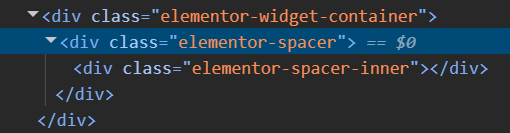
Those behind-the-scenes issues matter more than they often seem to. Build quality can affect usability, maintainability, clarity, and how well the page aligns with platform expectations. Cleaning up those areas helped strengthen the page from both a user-experience and paid-media standpoint.
We restructured the page around user intent
Beyond the technical cleanup, we also improved the overall hierarchy and flow of the page.
We reorganized the content to better match how a user evaluates a service offer. That included improving the sequence of information, refining how the message progressed from one idea to the next, and making the page easier to understand and easier to act on.
The goal was not simply to make the page look cleaner. It was to reduce friction, strengthen clarity, and support more efficient conversion behavior.
How We Structured the Split Test
To evaluate the changes properly, we ran the original and updated versions as a split test.
The test ran for 85 days. During that period, the client continued spending more than $5,000 per month on Google Ads, with total spend landing somewhere in the neighborhood of $15,000 to $20,000 over the full testing window.
That timeframe was important. We wanted enough time and enough budget behind the test to produce meaningful data rather than reacting to a short burst of results. Conversion rate optimization works best when it is treated as a measured process, not a quick reaction to a few early conversions.
By giving the test enough runway, we were able to compare the baseline and variation in a way that was commercially useful.
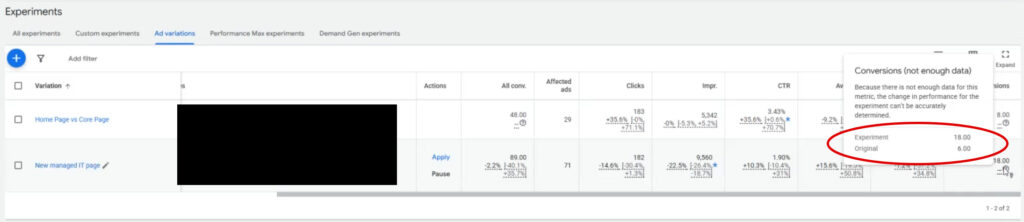
The Results: 3x Landing Page Conversion Rates, 18 Leads vs. 6 Leads Over 85 Days
The results were clear.
Over the 85-day split test, the original landing page generated 6 leads. The updated page generated 18 leads.
That means the test variation produced 3 times as many leads as the baseline.
From a business perspective, that kind of lift matters for more than one reason. More conversions from the same general traffic base usually means better acquisition efficiency, which in turn helps bring cost per lead down. That was one of the main reasons the test was worth running in the first place.
For a landing page conversion rate optimization test, this was a meaningful improvement. It showed that the original page had been underperforming more than it first appeared, and that the right combination of strategic, structural, copy, and technical changes could materially improve the outcome without changing the offer or rebuilding the campaign from scratch.
Why the New Page Performed Better
The updated version performed better because it did a better job of meeting the core requirements of a landing page.
A strong landing page does more than mention the right keyword. It needs to confirm relevance quickly, communicate a clear value proposition, reduce confusion, support trust, and make the next step feel natural.
The original page was not doing enough in those areas. The revised page was more intentional about each of them, which is why the improvement showed up so clearly in the test.
This is also why the case study is useful beyond this one campaign. The result did not come from a gimmick or an isolated trick. It came from improving foundational conversion elements that apply across many kinds of landing pages.
What This Case Study Shows About Improving Conversion Rates
There are a few important takeaways from this test.
The first is that a landing page can be functional and still far below its potential. Consistent lead volume does not necessarily mean the page is efficient.
The second is that conversion rate optimization becomes more important as traffic volume increases. Early on, a company may need to focus mostly on generating traffic. But once there is enough data to test meaningfully, improving the page becomes one of the most practical ways to improve profitability and support healthier growth.
The third is that many advertisers do not initially realize they need this kind of work. That is understandable. When leads are coming in consistently, cost per lead often does not become a serious concern until later. But waiting too long to address it can make inefficient performance feel normal. Taking action earlier can put the campaign on a much better growth curve.
That is what made this exercise worthwhile. It was not just about lifting conversion rates for their own sake. It was about improving the economics of the campaign before inefficiency became a larger constraint.
Conclusion
This case study is a strong example of what landing page conversion rate optimization can achieve when it is approached thoughtfully and tested properly.
The client already had a managed IT support landing page that was generating leads from Google Ads, but the campaign had room to become more efficient. By creating a duplicate version of the page, improving the messaging and structure, and addressing technical and implementation issues behind the scenes, we were able to generate 18 leads from the updated page compared to 6 from the original over an 85-day split test.
That is a 3x increase in lead volume from the landing page variation.
The broader takeaway is that better landing pages do more than improve form fills. They can help lower acquisition costs, support stronger paid-media efficiency, and give a campaign more room to grow profitably.
For businesses spending enough on paid traffic to generate meaningful data, conversion rate optimization should not be something that waits until performance becomes frustrating. It should be part of the growth process.
Ready to improve your landing page conversion rates? Learn more about out conversion rate optimization services and book a free consultation today.
About The Author